SEARCH
Brittany Ham
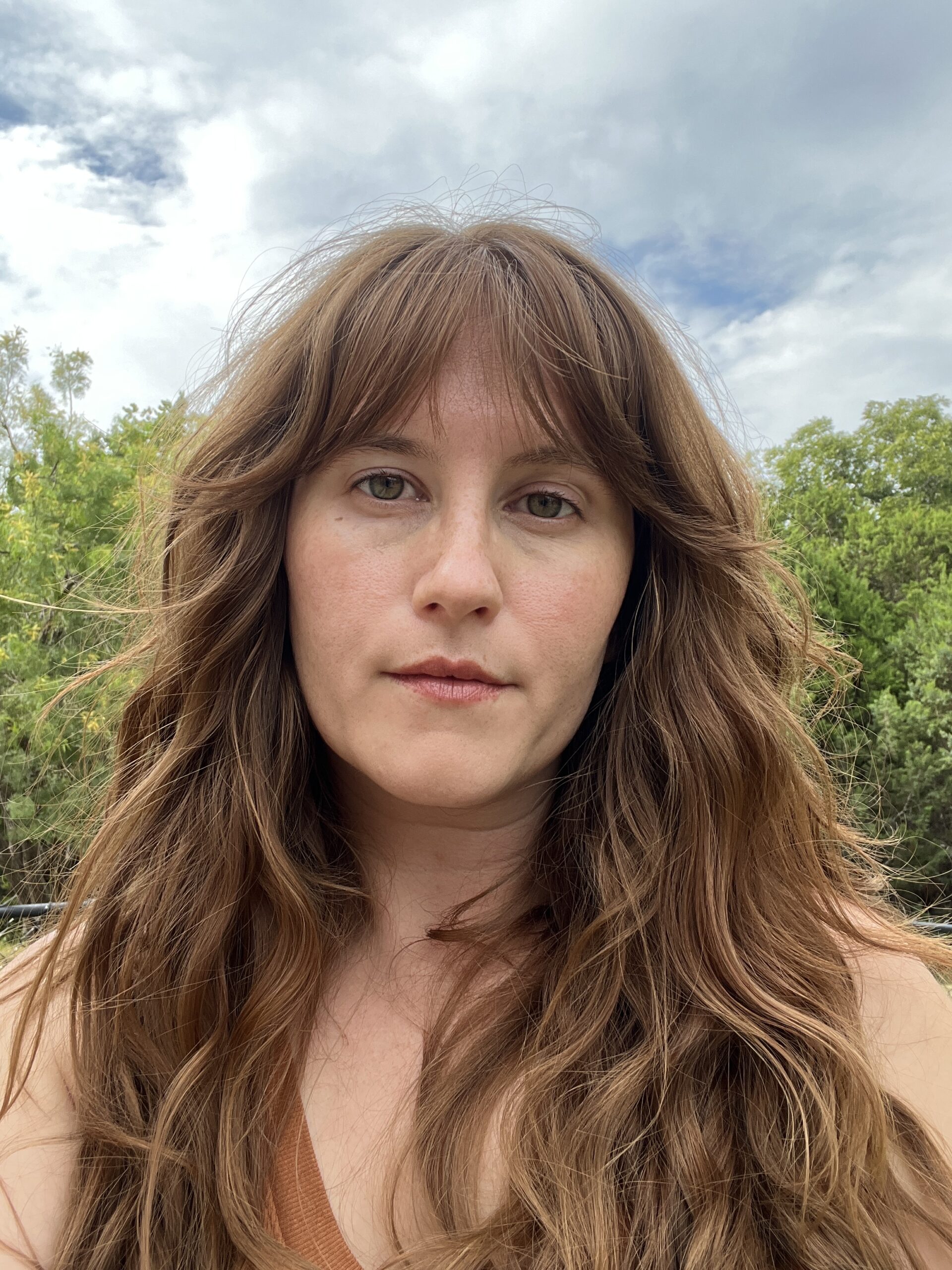
Brittany Ham is an artist based in San Antonio, Texas. She graduated with a BFA in Painting and a BFA Communication Design from Texas State University in 2012, and graduated with her MFA in Art from the University of Texas at San Antonio in 2016. Currently, she works as a Lecturer of Art at Texas A&M University – San Antonio. She has exhibited internationally in South Korea, Germany, and the United States of America, and her work has been featured in publications such as New American Paintings, Friend of the Artist, BE Magazine, and VAST Magazine. She has attended residencies at the Künstlerhaus Bethanien International Studio Program/Blue Star Contemporary Berlin Residency Program, Wildacres Artist Residency, Hello Studios, and Vermont Studio Center. Her art practice explores conventions of historical painting, abstraction, feminine experience, and figuration.
Resume (PDF)
MORE ABOUT THIS ARTIST
Artist Type: Visual Arts: Mixed Media Artist, Painter
Artist Style: Visual Art: Abstract, Conceptual, Contemporary, Figurative, Illustrative, Landscape/Cityscape, Narrative/Historical, Nature/Wildlife, Photo Realistic, Representational, Social Commentary
Artist Medium: Acrylic; Drawing Media; Oil; Watercolor
Artist Statement of Work
Tell us about your work (style, approach, philosophy, subject and/or theme):
Solo Creative Practice Statement:
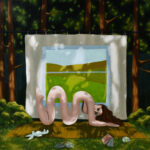
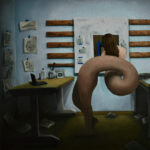
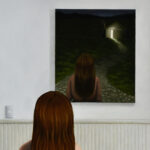
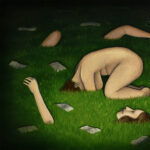
My creative research centers on the critical exploration of the presentation of feminine experience and investigates how historical practice may be subverted in a contemporary context to allow room for awareness, humor, and representation through a feminist lens. My identity as a feminist is closely tied to my practice. Through a study of humor and figurative manipulation I draw attention to the perceived fantasy of feminine experience in historical tropes of painting while confronting these perceptions with humorous observations of the reality of embodied experience. I am intensely interested in the role of women in art history and am devoted to questioning the role of women in historically male dominated modes of artmaking. As well, my work is ongoing research that is primarily engaged with the history of painting as a practice in which I am most concerned with subverting patriarchal narratives that have dominated the discipline.
Between 2020 and 2025, my work engaged with nature as an escapist setting for self reflection. In my work narrative subjects retreated from their homes to the outdoors to escape the claustrophobia of a global pandemic, new mothers sought refuge from the uncertainty and reinvention of parenthood in darkened forests and solitary fields, and more recently, subjects reflected on the cyclical and adaptive pattern of nature. They interact with a world that evolves in cycles, responding to current events and environments in way that mirror and visualize growth patterns of nature. Trees reach for the sun, stretching to compete against their neighbors for light; mountains twist and wind as they recede into the earth; the seasons repeat in a never-ending loop of change. In my work, the body longs for the steady presence of this loop and adapts to join in the cycle of life.
Collaborative Practice Statement:
Brittany Ham and Justin Korver have worked collaboratively since 2018. Together we have developed several large scale exhibitions, such as Boys With Feelings and Girls Without Them at ClampLight Studios and Gallery in 2018, The Hunt at Charles Adams Studio Project in 2021, The Chase at grayDUCK Gallery in 2023, After the Bonfire at Bosque Gallery in 2025, and a future exhibitions to be named in 2026 at the Texas State University Galleries’ FL3X Space and Sala Diaz.
Most recently since 2021 we have developed a body of work that centers on the theme of the allegorical hunt used in European tapestry. This subject emerged for us during independent research residencies at Kunstlerhaus Bethanien International Studio Program in Berlin, Germany. We are both interested in the hunt and its allegorical references to the relationship between men and women. Conventionally this relationship was represented with men as actively pursuing the passive feminine prey; in our collaborative imagination we problematize this binary reading and create a more ambiguous dynamic of the gendered narratives of the hunt. The work also examines the separation between the human and inhuman and proposes that this boundary as a false separation while engaging the landscape as an active participant in the exploration of the reimagining of the narrative of the hunt.